

1 November 2025
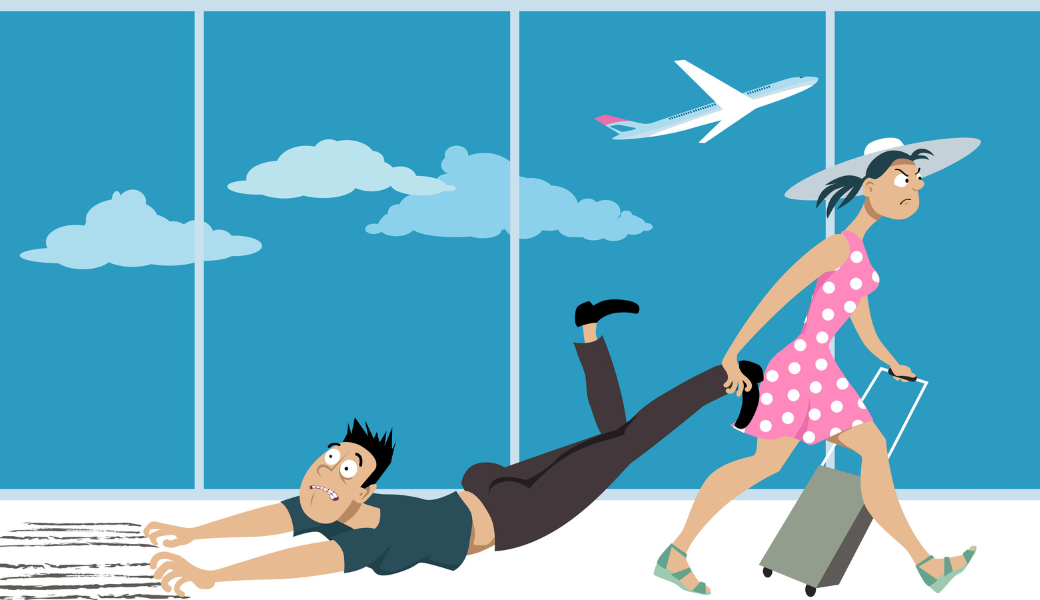
Fear of failure, driving anxiety, fear of flying, and more, these are just a few of the many fears people experience every day. Fear can show up in many forms, and sometimes it can feel completely paralyzing. The good news is that fears are often much easier to address than you might think, because they’re usually maintained by just a few underlying beliefs.
In this blog, we’ll look at five common fears: fear of failure, claustrophobia, driving anxiety, fear of flying, and fear of spiders. We’ll explore how these fears develop, which beliefs often lie beneath them, and how you can break through them, so situations that once caused stress can start to feel much lighter.
1. Fear of failure
Fear of failure often stems from a deep desire to do well. Maybe you once learned that making mistakes equals failure, or that your worth depends on your achievements. Because of that, any situation where you’re being evaluated, at work, during a conversation, or even while doing something as simple as playing sports, can trigger tension.
Beneath this fear are often beliefs such as “I’m not good enough,” “I have to do everything perfectly,” or “I can’t make mistakes.” These beliefs subconsciously drive your behavior and stress response, reinforcing the fear over and over again.
2. Claustrophobia (fear of enclosed spaces)
Claustrophobia isn’t only about small spaces, it’s really about the feeling of having no way out. An elevator, a train, or a crowded space can suddenly feel suffocating because your subconscious believes you’re trapped. For many people, this touches on a primal fear, the fear of losing control or being confined with no escape.
This tension often arises from beliefs like “I’m not safe when I’m not in control,” “I always need a way out,” or “I’ll die if I’m trapped.” Once these beliefs are triggered, the body reacts as if it’s truly in danger: your heart rate rises, your breath shortens, and you just want to get out.
3. Driving anxiety
Driving anxiety often develops after a distressing experience: an accident, a near miss, a panic attack behind the wheel, or even a moment where you simply felt unsafe in traffic. Sometimes you know exactly when it started, other times it seems to appear out of nowhere. What all these cases have in common is that the brain has linked driving with danger.
Beneath that reaction are often beliefs such as “I’m not safe on the road,” “I’m not in control,” or “I can’t trust myself in stressful situations.” These beliefs make your body tense up before you even start the car, even when there’s no real danger.
4. Fear of flying
Fear of flying is rarely about the airplane itself. It’s often the fear of letting go of control: you can’t get out, you don’t know exactly what’s happening, and you’re dependent on something beyond yourself. That sense of surrender can feel uncomfortable, especially if you’re used to staying in control of situations.
Underlying beliefs might include “I’m only safe when I’m in control” or “I don’t trust what I can’t see or understand.” These beliefs activate your body’s stress response as soon as you step on the plane, or even days before your flight.
5. Fear of spiders
Fear of spiders is one of the most common phobias. What makes it so frustrating is that you know the fear isn’t logical. Your rational brain understands that the tiny spider is harmless, yet your body reacts as if there’s real danger: a racing heart, muscle tension, the urge to flee. This happens because your subconscious once made a direct association between “spider” and “danger.”
This kind of fear is often passed down unconsciously. Imagine walking with your mother into the garden shed, and suddenly she screams, runs away, and calls for help. What turns out to be the cause? A spider in the corner. What do you learn as a child? Exactly, spiders must be dangerous!
That automatic reaction is then maintained by beliefs like “I’m not safe when I see a spider” or “I need to get away to protect myself.” Your body follows those beliefs automatically, without you consciously choosing it.
Why PSYCH-K® works so well for fears and phobias
Fears and phobias often arise from sudden, distressing experiences that create deep, limiting beliefs. The beautiful thing is that these stressful associations are usually quite specific, which means the fear or phobia can often be resolved faster than you might expect. With
In
Once the stress response subsides, there’s space to explore the beliefs underlying the fear. These beliefs are then rewritten into supportive ones that align with who you truly want to be. This not only shifts your thought patterns but also your automatic reactions in daily life. Your body relaxes, and situations that once felt overwhelming now feel safe and manageable.
More about
Would you like to discover which beliefs are keeping your fear in place? During a
Werff Letter
Would you like to receive the monthly newsletter? Sign up to read stories with

